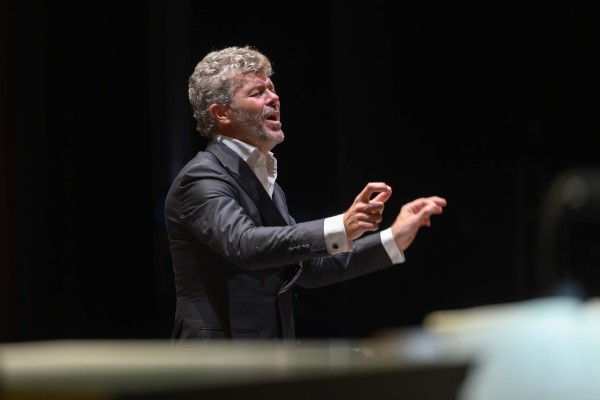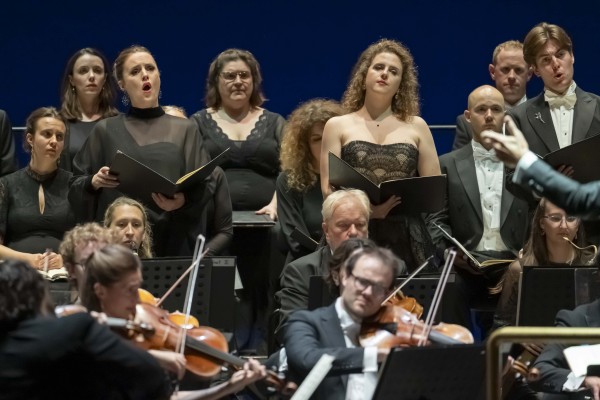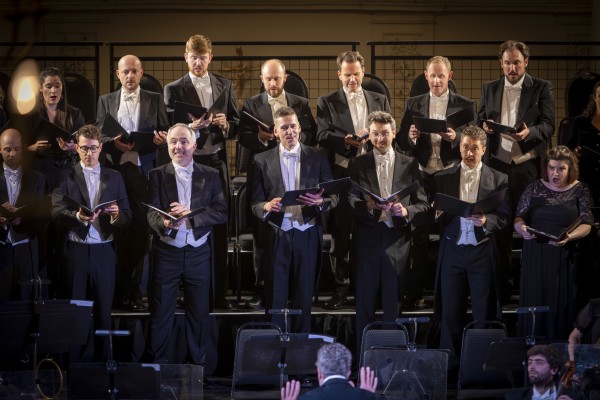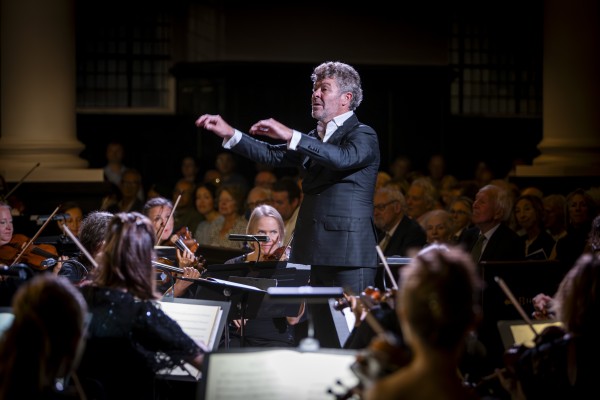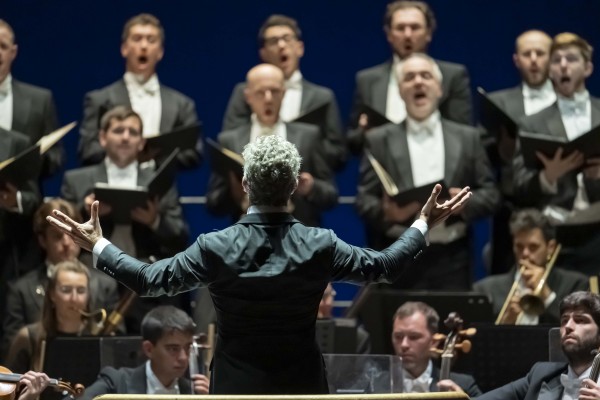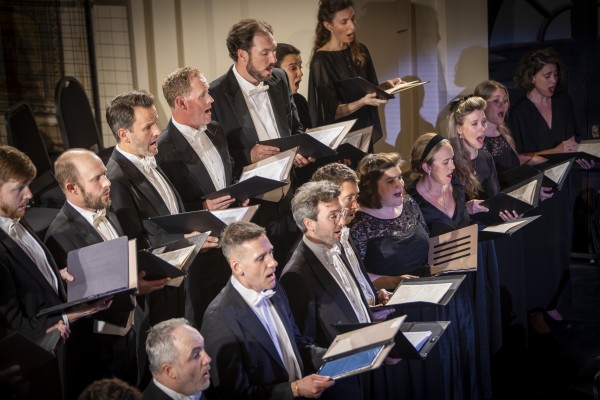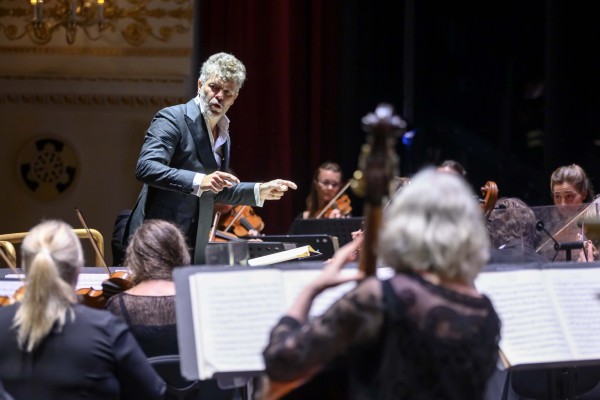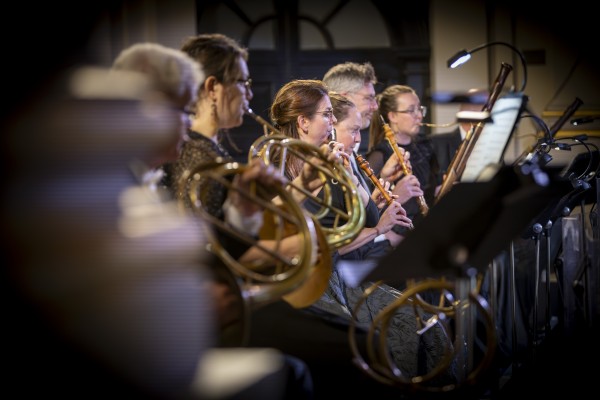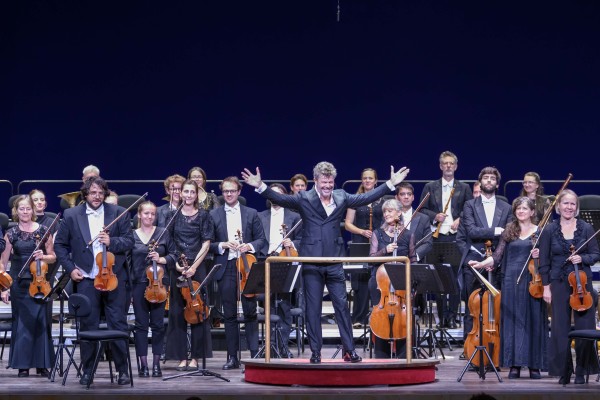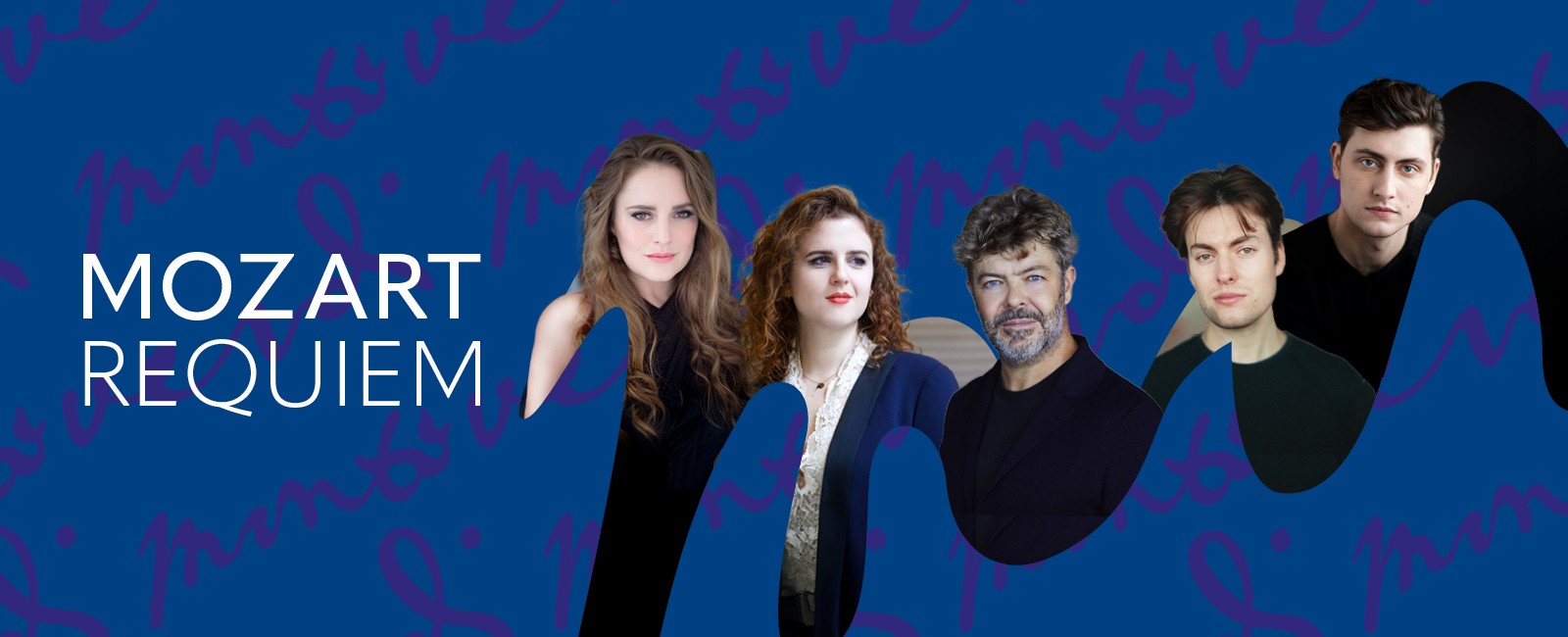
The Monteverdi Choir brought its ‘extraordinary class’ (Leipziger Volkszeitung) to Mozart’s final masterpiece, with acclaimed Spanish conductor Pablo Heras-Casado making his MCO debut, also conducting Schubert's Fifth Symphony and Bach's motet ‘Singet dem Herrn’
Bach Singet dem Herrn ein neues Lied
Schubert Symphony No. 5 in B-flat major
interval
Mozart Requiem in D minor
Monteverdi Choir
Orchestre Révolutionnaire et Romantique
Pablo Heras-Casado Conductor
The Orchestre Révolutionnaire et Romantique’s raison d’être is the music of the Nineteenth Century, bringing fresh insights to this repertoire through compelling performances on period instruments.
Over the next few years, the collaboration with Pablo Heras-Casado will build on the orchestra’s extraordinary legacy – delving ever more deeply into the symphonic and operatic music of the Romantic period, revisiting music for which the ORR is world-renowned, and expanding to explore repertoire that is entirely new. We began with Schubert and his musical forbears, Mozart and J.S. Bach, with the ORR joined by the Monteverdi Choir.
★★★★★ "Pablo Heras-Casado, a conductor as at home in Wagner at Bayreuth as he clearly is with the Monteverdi Choir and Orchestre Révolutionnaire et Romantique, stunning us with a consistently vigilant and alive Mozart Requiem... more from this team, please."
"One of the most dramatic performances of the Requiem that I have ever witnessed"
★★★★★"What impressed most across the evening was the rapport between choir, orchestra and conductor. Heras-Casado drew singing of blazing precision and orchestral playing full of character, shaping each work with a keen sense of style yet allowing moments of spontaneity to emerge naturally... this already feels like a partnership of real significance, promising music-making of the highest calibre"
It was typical of Johann Sebastian Bach to take the seventeenth-century genre of the German motet, mingling biblical and Protestant hymn texts, and raise it to new heights of contrapuntal sophistication and expressive intensity. Most of his motets seem to have been associated with burial or memorial services.
When he heard Bach’s motet ‘Singet dem Herrn’ in 1789, Mozart cried out: ‘Now, there is something one can learn from!’. He died in December 1791, having completed two thirds of his Requiem. The origins of Mozart’s last, unfinished work quickly acquired a mysterious aura: a gaunt stranger in a long black cloak appearing like a ghost and commissioning Mozart to compose a Requiem under conditions of total secrecy. Although this figure was later revealed to be German nobleman Count Franz von Walsegg, in romantic legend the stranger became an emissary from another world, a harbinger of Mozart’s own death.
In October 1816, Schubert wrote: ‘As from afar, the magic notes of Mozart’s music still gently haunt me. They show us in the darkness of this life a bright, clear, lovely distance…O Mozart, immortal Mozart, how many comforting glimpses of a brighter, better life have you brought into our souls'. That same month, he completed his Fifth Symphony, the most Mozartian of all his orchestral works.