25 Feb 2026
Meet acclaimed tenor Nick Pritchard as he returns to perform Bach's St John Passion with the Monteverdi Choir and English Baroque Soloists in Budapest and London.

What makes St John Passion so distinctive?
For me, it’s the drive and pace that keeps it moving forward so dramatically. There’s more of the blood and guts of the story in this version of it, which, when they come, makes the moments of incredible beauty really stop you in your tracks.
How do you maintain vocal stamina across such an extended work?
There’s the obvious aspect of hoping your technique decides to join you on stage, but the more I do this piece, the more acquainted I get with the places in the story where you can afford to dial things down a bit in terms of pace and volume, and realising that this can actually help aid and propel the drama even further… but it also has the side benefit of being helpful in maintaining vocal stamina! No matter which way you cut it though, it’s a piece that always takes a lot out of you.
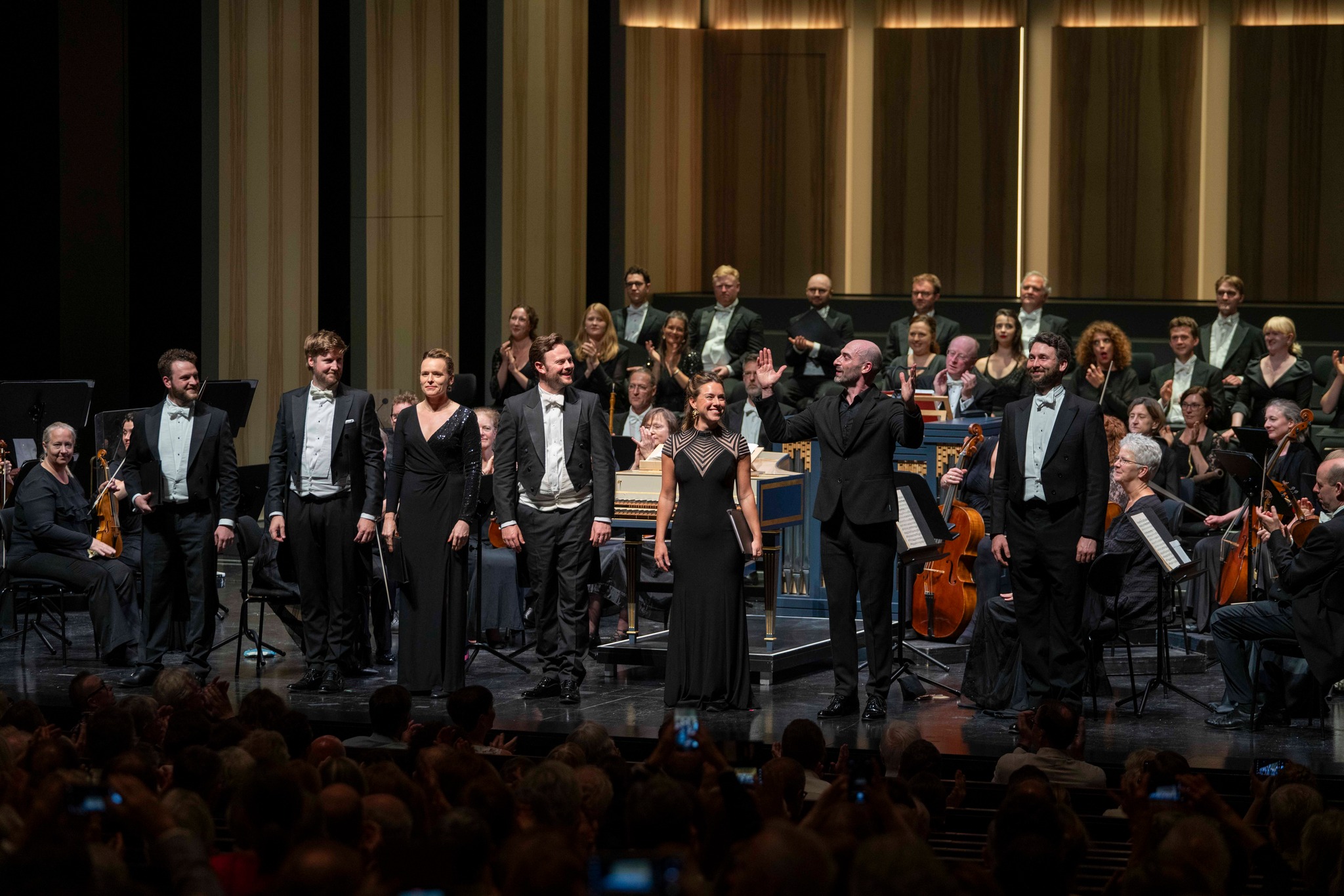
Peter Whelan conducts Israel in Egypt © Marco Borrelli
What do you find most rewarding about working with the Monteverdi Choir?
It’s always been an ensemble of the highest quality, where the music making is led by the text and the story we’re telling - you’ll never hear a nice sound just for its own sake, it’ll always be motivated by intensifying the level of communication with the audience. No matter where in the world they are, you’ll always see an ensemble who gives their all from start to finish, and I’m thrilled to see that ethos being brought forwards in this new era for the group. Even more rewarding than that, however, is that 15 years ago while singing in the choir, I met an amazing person called Gwen, who I’ve now been married to for 7 years and share two wonderful children with.
What has been the most surprising part of your career so far?
It’s probably the last time I did the St John Passion for the Monteverdi Choir back in 2021. It was originally going to be a large European tour, which was cancelled because of the pandemic, but the group managed to salvage a filmed socially distanced performance in the Sheldonian Theatre in Oxford, which was like water in the desert for all us musicians at the time. It was always going to be streamed on DG Stage+ on Easter weekend, but it gained such traction that it was put up on the website again a few weeks later, first temporarily and then permanently, and then released as a full audio and visual album a year later - something that hadn’t even crossed our minds as a possibility when we were actually in the theatre performing it. We were just glad to be there! And to top it all off, it was nominated for a Grammy award, so that was a incredible surprise too. I also once sang a Messiah which was conducted by Sue Perkins, which was fabulous, and surprising in a very different way!
If you weren't a tenor, what would you do, musical or otherwise?
I dread this question, as I have very few other transferable skills! If we’re talking dream jobs, which I have no realistic prospect of actually going in to, then it would be either a cricket commentator (travelling round the world to incredible places and sitting down watching cricket all day sounds ideal to me), or running a literary festival somewhere. Otherwise, I’m very much hoping I don’t have to reckon with this question at any point in my life!
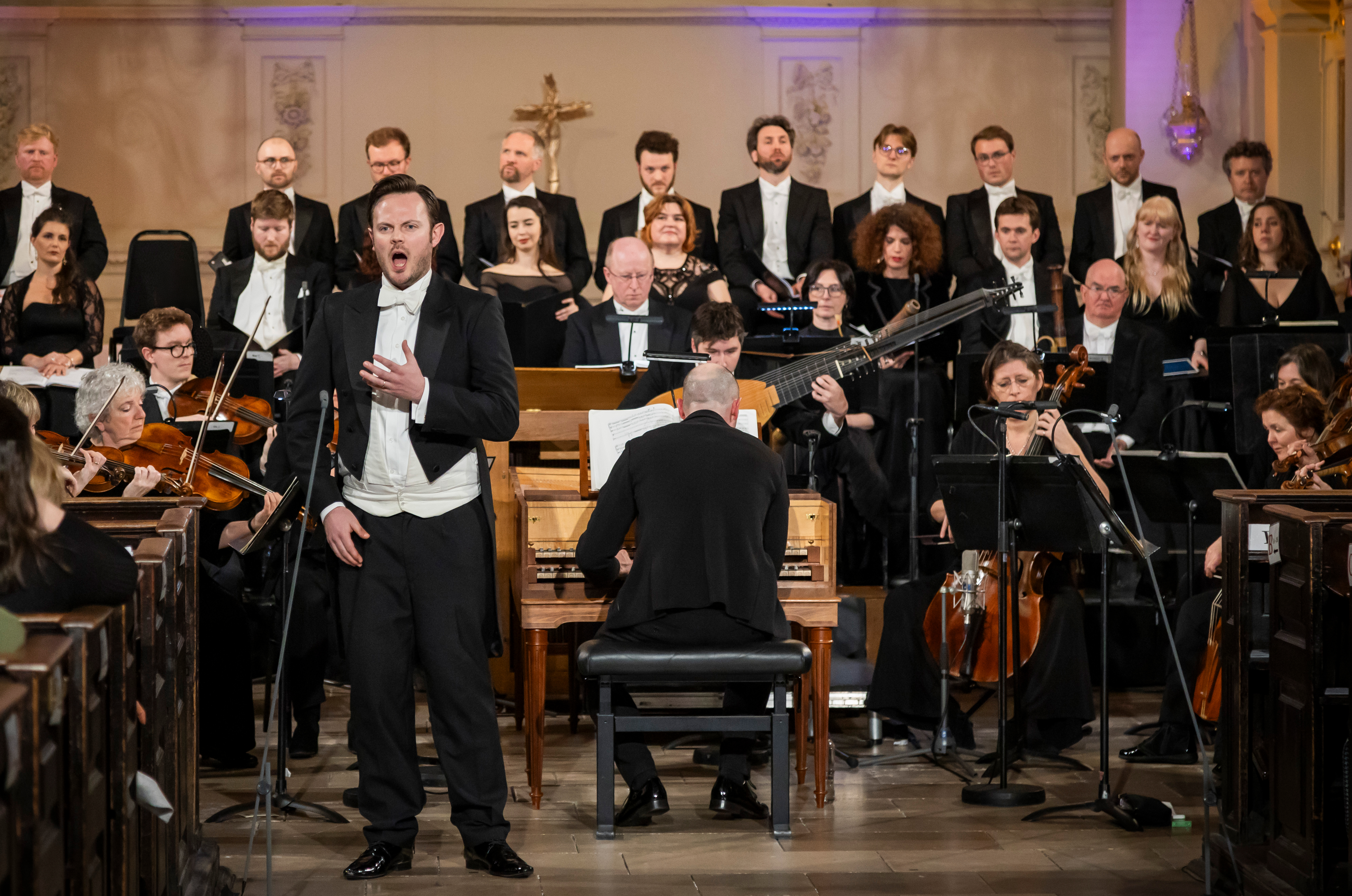
Peter Whelan conducts Israel in Egypt © Paul Marc Mitchell
How do you prepare yourself and your voice before performances?
The most significant preparation you can do is long before the actual day of a performance, so that’s stuff like getting the music comfortably in to your voice, being really familiar with everything that the piece demands of you and generally being in a position where you can do what you need to do as easily as possible. On the day itself, being in the right mindset for whatever you’re about to perform is vital, so taking a few moments before you go on stage, to focus on the task in hand is really helpful. Some days that might involve reminding yourself to enjoy it, or remembering to believe in your abilities. I personally don’t like hanging around and waiting too much before a performance, so I like short breaks between rehearsals and concerts, and I’m definitely not someone who’ll get changed in to performance gear very early. If I have too much time to relax, then I switch off and it’s a huge effort to get everything going again!
Who were your earliest musical influences?
In terms of Classical singers, Toby Spence and Anthony Rolfe-Johnson were (and still are) huge inspirations for me when I was learning the ropes. They both sit comfortably in the ‘English Tenor’ repertoire, but bring full bodied sounds to everything they do - a combination I find totally thrilling. However, it took me a while before I clocked myself trying to sound like them - my voice is very different to theirs, and there were definitely moments in my early singing career where I was trying to make my voice do things it shouldn’t do, because I love how it sounded when they did it. I don’t think I do that anymore, but it took me a long time to separate what I love to listen to, from what my voice is capable of and suited to. There are many musicians from all kinds of different genres who have influenced me in different ways since, but those two tenors in particular definitely have a lot to answer for.